Every world follows from its star.
Xalaria is not a backdrop painted to look good. Each of its worlds is worked out from its star by the laws that shape real worlds, from the warmth of its starlight to the chemistry of its clouds and the life that could evolve there, and every picture of it is painted live from those same facts. Here is one, chosen at random from the worlds where a civilisation arose.
Choosing a world…
“This study attempts to realistically describe an arbitrary number of solar systems, as if observed by travelling from one star to another and simply recording what was discovered.”
Xalaria fitted no genre that existed, and its music is his own, drawn from his catalogue of classical works.
Every solar system follows from its star. Star classes run from rare blue giants to red dwarfs, the commonest stars, as in our own galaxy, and a star's class sets its size, temperature and planetary disc, and so the orbits, sizes and materials of its planets and moons. A world's warmth is the starlight reaching it, heat from the planet a moon circles, and heat from its own core.
Cochran worked with leading astrobiologists, including David J. Darling, on the life a world could naturally have produced, such as carbon and silicon life on solid worlds, gaseous and electrical life in the atmospheres of giants, and life in oceans and underground where temperature allowed. Xalaria is not mere entertainment but a realistic forecast of what you would find, probabilistically, if you were to explore it yourself. The only fictional stretches are acceleration beyond what a human could endure, and the use of wormholes. All else is as you would observe the universe itself, with each world on its Kepler orbit, true in size, composition and temperature, and in the life that emerged from it.
Even the sky is science. A world's clouds are whatever its temperature allows, as across our own Solar System, with the orange haze of Titan, the methane of Neptune, the ammonia of Jupiter, the water of Earth, the acid of Venus. Its rings follow published studies of how rings form and last, so most are faint, as Jupiter's are, and bright rings of ice like Saturn's appear only where ice is cold enough to hold them.
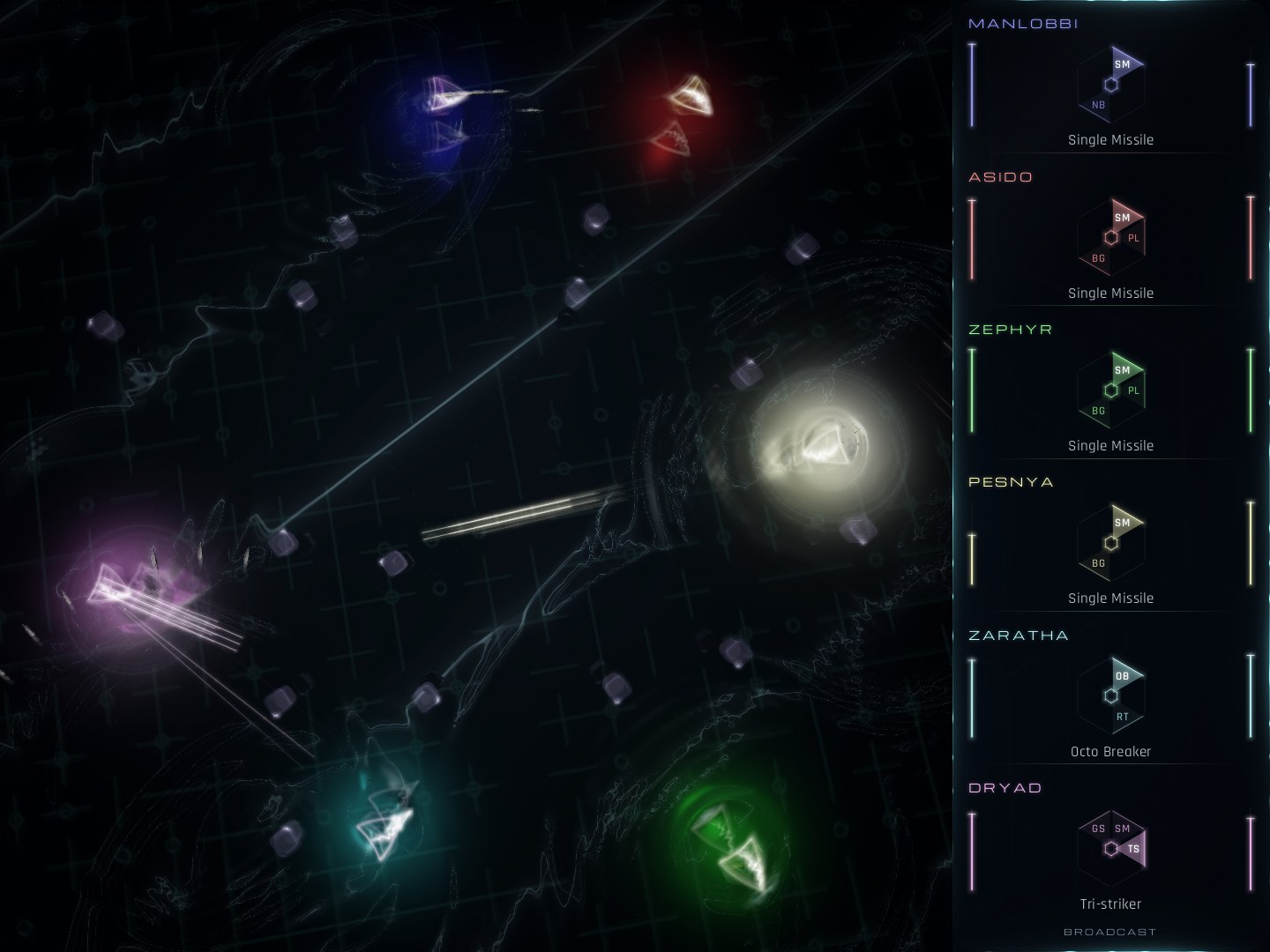
Commanded in words. Seen as it happens.
A word from you starts a journey, a landing, a wormhole crossing, and you can watch every one of them unfold. The universe you read is the same one you can see, in real time and mathematically exact, with each planet and moon on its orbit by the game's own clock, each world turning on its axis through a day exactly as long as the game gives it, moons held by tides with one face to their planet, the stations in orbit, and you among them. There is nothing else like it, a text adventure you command in words, with its whole universe there to be watched.
The universe explorer
Every star, planet and moon of the 7,804 systems, each exactly where the game places it at this moment. Fly from the whole galaxy down to a single moon, speed time up or slow it down, and return to the present.
at real-time speed every planet is exactly where the game server places it
The simulator in the game
Open it at any moment while you play, and it rides with your vessel, wherever you truly are, leaving orbit, through a wormhole, circling down to land, docked among the stations of a world.
its window, at the top of the game's screen
The film of your journey
Later, the simulator flies your whole voyage again, star by star and world by world, with the pictures of where you landed and each city's own music as you pass.
journal · Trace our journey?
yes
Written when games were true art, Xalaria joined the text adventure to real-time multiplayer strategy.
Australian mathematician and composer Julian Cochran began Xalaria in 1998 with a universe simulator and his own 3D engine, the one that later revived his 1992 shareware classic, D-Zone. Then Xalaria took the braver path, from graphics into words. A universe told in words can be larger and more intricate, because your imagination paints every world, as it does in a novel. From then on everything served the player's creative freedom, and scientific, cultural and sociological depth.
And the world has caught up with Xalaria. Today we give computers instructions in words and let the work run on while we turn to other things. Xalaria has always worked that way. A word from you, and your life in the universe goes on around you in real time, a journey under way, a deposit being mined, a concert about to begin, a station rising in orbit, while you read, talk and decide what comes next.
Xalaria is a role-playing universe, intricately balanced around two north stars, your Technology Level and your Culture Level, each from 1 to 13. Experience raises one or the other, every level carries a title, and each opens doors the other cannot.
Technology Level
Rises with experience as you explore, prospect, find new life, salvage and fight. It steadies your aim, lets your mining tools bite deeper, carries you to ever more advanced stations of your own, and lets you farm ever harsher worlds.
ReaderTechnicianEngineerHackerInventorProgrammerAstrogeneticistRoboticistMetaphysicistMind creatorAstrotechnistMaster technistGuardian technist
Culture Level
Rises with experience among the civilisations of other worlds, through their concerts, Art Galleries and celebrations, gifts well chosen, rites passed. It opens other cultures' music, art and dance, lets more of what they say come through translation, makes others slower to take offence, and makes everything you hold earn more.
Nature walkerCollectorInstrumentalistPoetArtistLinguistMusicianPhilosopherNeurolinguistAstrobiologistAstroculturalistMaster composerGuardian composer
Xalaria is played with verbs, one key each, and every key types its word, so a command reads as a sentence, and n w is “navigate wormhole”. Once you have the hang of it, you act as fast as you think, with a plan, a deal or a manoeuvre under fire in a few keystrokes, where other games make you click through menus.
- navigate
- look
- explore
- communicate
- fire
- build
- drop
- retrieve
- use
- goodwill
- journal
- knowledge
- map
- inventory
Real time
The universe runs on the clock. Worlds turn on their orbits while you play, crossings take minutes, and every other traveller is out there right now.
navigate other world · arriving in 54 s
Strategy
Trade, alliances, technology, culture, building and quests compound over weeks. Civilisations remember what you did, and the road to the end is one of the longest and deepest in gaming, with more than one way to reach it.
goodwill · how every alliance regards you
In your own words
Everything is told and commanded in words, and you may say anything to anyone. The vessels, leaders and keepers you meet answer in their own manner, from what is true where they are, and remember what they saw you do.
communicate · a vessel · message · then type anything
Every chance in Xalaria is worked out.
The Traveller's Handbook sets out how the universe works, from the first key you press and the voice in your craft to the cultures, alliances and battles, and the homecoming at the end, drawn in pen and ink, with the dice that would roll it.
The Traveller's HandbookEight books, from the first key to the homecomingBegun after school, in 1991.
Xalaria began as a role-playing game written after school in 1991, became a universe simulator in 2001, and took its present form and its name between 2018 and 2021. The story is told in Julian Cochran's memoir, and in his notes and a feature from the years of D-Zone II.
History of XalariaSeven articles, 1991 – 2021Other travellers are part of your voyage, even when they are not there.
Xalaria is one universe, running for everyone at once. The station you dock at is the one a stranger left an hour ago, and the mine you abandon is the one they will find, exactly as deep as you dug it. Friends are seldom online at the same moment, so the game is made for presence across time as much as company in the moment.
A friend can begin their very first voyage docked beside you. Ask your computer for a link, add a few words of welcome, perhaps a gift, and send it. If they are already out among the stars, leave a note on a station's notice board, and the administrator will hand it over when they next dock. Or give the message to one of your robots. It flies there in its own craft, waits in orbit where anyone may meet it, or fire on it, and comes back to tell you how it went.
Leave it to me. I'll take the scenic route.
Travellers who meet can form a company. From then on your journal shows where each of the others is, and when one of them is in trouble, you hear it wherever you are:
A distress call from Ana5, in the orbit of Zhiogs, at Oylanhai. Their shields are almost gone.
Sit through a concert beside someone who never told you their name, and your journal keeps them exactly as you saw them, as the crimson Vimba. Friends raise stations together, since anyone can feed a station's frame with metal, and the antiques that travellers donate are what fill its Art Gallery.
Every civilisation asks to be understood on its own terms.
Land on a world with a civilisation and you will not see its cities from the sky. You find them by exploring the wilderness, and inside each one is a Concert Hall, an Art Gallery, and festivals of its own, none of which waits for you. The Concert Concierge gives the time of the next concert in turns of their world, and your computer translates:
That's 12 minutes, by our clock.
The music is the culture's own, made from its world. A hot world sings higher, a small one moves more quickly, and the city's alliance colours the rest. It is not background. Whisper to someone during a quiet passage and the game tells you so:
Your voice carries across the hall in a soft passage, and a chorus of hushing answers.
You will try to describe it afterwards. Everyone does. No one ever has.
Understanding is never handed to you. Each culture's music, art and celebration needs a certain Culture Level before a stranger can follow it, though far less where it is the art that culture loves most. Fall short and the seat is paid for and you leave none the wiser, told only how far you were from it. Each one you do understand changes how the city deals with you, and your computer notices:
We belong a little to Woa'a now - kinder prices, and hands to tend a farm, if we ever sow one.
Learn a city's music, its art and its dance, and it gives you a name in its own sounds, with a meaning in ours, such as the one who carries our song or the one who danced at our feast. Its vessels greet you by it from then on. Join a festival you do not understand and it may name you anyway, as the one who trod on the dancers or the one who clapped alone.
Some cultures choose who continues by music, some by judging new works, some by trials of the mind or the body, and to an honoured guest they offer that test as a rite. Fail it and their celebrations are closed to you for three days. Pass it, and it reads like this:
You take up their anthem, and they take it from you and carry it higher. When it ends, they turn to you as one.
In the marketplaces, dealers sell what other cultures have lost, such as the manuscript of a forgotten anthem, a festival mask, a glass instrument, the seeds of a vanished flora, old charts of the stars nearby. Half are fakes, and the dealers are persuasive:
That's the old pilgrims' hand. My grandmother kept one just like it, and every mark on it was true.
Play a lost anthem to the culture it belongs to and they know their song again. Wear a true festival mask among them and they take you for one of their own; wear a fake and you are a joke, and shut out for a day. Even the empire that has tormented your home for centuries has a culture of its own, and understanding it may end the story in a way that war cannot.
Every star sets its own prices.
Twenty-nine commodities move between the stars, from aluminium and iridium to quantum neurocells, marble and granite. Buy where something is cheap, carry it through a wormhole, sell where it is wanted. The station shops speak before they sell, and not everything they say is true; a "special price" is sometimes just the usual one.
Welcome, dear traveller, to the finest establishment in the system.
A city's Exchange is less dependable and more interesting. Some haggle, some barter goods for goods and refuse your coin, some will not trade with a stranger at all until you know one of the city's ways, and on a festival day their ornaments come cheaper. What a city's market sells is even a quiet clue to whose side it is on.
Search a world's wilderness and it gives up what it holds: You find an iridium mining opportunity!
Fire a mining tool at it and tunnel down, and Nature Preservation notices how deep you go, and thanks you if you fill your mines in. Search further and you find life no one has catalogued, quarries of the stone that Concert Halls and Art Galleries are built from, and the ruins of fallen cities, whose broken towers and the wrecks around them still show who fought there.
Come through a wormhole to a star no one has reached and it is charted in your name, for good. Every traveller who arrives after you reads it:
This star was first charted by Galen, 2026.
Cities ask for what their citizens need, a message carried to another city, an expedition to a distant world, and travellers leave quests of their own with a station's administrator, the reward held until someone completes them.
What you build stays in the universe, and so does whatever happens to it.
A station begins as a frame in orbit. You choose how advanced it is to be, seed it with construction nanomites, then feed it structural metal, aluminium, iron, titanium, nickel or chromium, trip after trip from your own hold or a friend's. When it is full it closes, and it holds or buckles according to how far your technology reaches beyond your ambition.
Once it stands it is yours. It takes your alliance, its administrator greets you as its founder, and every vessel that berths there pays a fee into a till that waits for you to come and collect it. Your computer sees where this leads before you do:
A station of our own. If we ever want an alliance of our own, 'g goodwill' is where it begins.
Give it a Concert Hall of granite or an Art Gallery of marble, quarried on stony worlds. The Art Gallery stays shut until it holds three genuine pieces, and each traveller who donates one earns the goodwill of your station's alliance. Every ticket sold earns you a little culture as well as money. Technology raises a station, but culture is what makes it pay.
Farms are planted on a world's land, under the protection of a city that knows you, and the better you understand that city the better they do. Its workers sing the city's anthem, they grow what the citizens prize, and the harvest comes in for their festivals. Leave them unguarded, though, and someone will notice. Purchase security from the cities of the system, or set your own robots to watch, each in its own character:
I'll watch the fields. From up here. Very carefully.
Any thief who tries that farm will regret it.
Nothing tells you when you have been robbed, or worse. You find out by coming back to a till far smaller than you left it, or to an empty orbit, and from the robots who were there and saw who did it. Track the raider down and ask, and it may tell you itself:
Oh, that was yours? I finished the Ana station a few days ago. Good pay in it, too.
A fight in words is a fight against the clock.
Combat happens in real time, while you type. A craft has up to four ports, and each holds one thing, whether a laser for a single target, a blast that strikes every vessel in range, a glow shield, a cloak or a mining tool. Every shot drains your weapon energy, and your shields are falling while you decide. Which port you fire, at whom, and when, is the whole of the fight. A Focal Death takes fifteen seconds to charge, and every craft nearby sees it coming.
You are seldom alone in it. Stand with one of the great alliances and its vessels may turn their guns on whoever fires on you, each in its own manner:
That's a friend of ours you're firing on. Bad for business.
Cities defend themselves with what they are made of. A built city fights from its watchtowers and gate towers, a crystal city from spires and lenses that focus a beam, a grown city from thorned towers and spore-pods. And an attacker you escaped does not forget you:
Remember us? We remember you.
Yet you never have to fire a shot. Speak first and most meetings end in words. A hostile city will hear an offer of peace from its leader, its council deliberating while its defences go on firing, and it refuses too little without ever saying how much would do:
That's an opening bid, not an offer. Try again.
The Rebels will not be paid at all. They always grant a hearing, and ask for amends in kind:
Keep your money. A wrong is mended by deeds, not coin.
Where do you stand?
Every station, city and vessel stands with an alliance or with none, and if you listen you can tell which long before anyone says so.
The Freedom Fighters greet you as a friend of liberty and are certain their system is the best in the universe. Their citizens let it slip in passing: Democracy is a gift worth carrying to far stars.
Their vessels put it more plainly: Every system deserves to be free. We just help them see it.
Traders want what is good for business, A contract kept is worth more than a fleet.
Nature Preservation speaks for the worlds themselves, We count the forests among our citizens.
And the Rebel Coalition, few and hard to find, live by arete, honour, excellence and virtue, and always want to hear where you have been: Honour to you, traveller. Tell me what you've seen.
Cities with no alliance keep their own counsel: We ask what a thing is before we ask whose it is.
A city never tells you whose side it is on. Ask its leader and you are mostly turned aside, Ask me again when we know you better,
so you piece it together from what its citizens let slip, until your computer asks which alliance you suspect, and names the city that way from then on, right or wrong.
Every alliance keeps its own regard for you, in words, never numbers, from have never heard of you to revere you, earned by deeds alone. Stand well enough with one and its stations will invite you to join; leave, and it remembers that you walked away. Or found your own, with a name, a cause and a creed in your own words. Travellers who come to think well of it are invited in, its members share equally in everything its stations earn, and every station it raises moves the borders on your star map.
And then there are the small things.
Buy a robot and it has a temperament before it has a task. Ask a fearful one what it can do, and it answers, Oh, lots, as long as nothing shoots at me.
Tell it what to call you and it will. A pilot robot flies a craft well; a nurse flies it late, flustered and slow to fire. Carry a small creature in a travelling cage and it grows restless when something hostile is waiting outside the station.
Talk a station's administrator into returning some of the commission it took on a robot it sold you, and you may get a fifth of it back, with a great fuss. Push too hard and you have made an enemy of the shop:
I'm... I'm actually shaking. Leave. Just leave. Our dealings are at an end.
Repaint your vessel with a spray can and those who knew you only by sight lose track of you; your computer puts it neatly, Whoever knows us by name will know us still; to the rest, we are someone new.
Fly close to one of the brightest stars and its radiation breaks up every voice that reaches you, beginning with Great radiation interrupts the signal.
Catch a disease exploring a crowded city and some leaders will ask you to leave before you spread it. And one city may tell you something it cannot explain:
We beseech your help! Our population is in decline, they disappear during their ordinary routines outside of the city, but they don't return.
One universe, and everything in it.
Every number here is counted from the universe itself, as the game generates it.
navigate wormhole · You enter the wormhole. Your vessel shudders.
Why did your vessel shudder? That is for you to perceive, and Xalaria is filled with travellers who have a love of perception.
A universe told in words.
Ninety seconds across the Xalaria universe, its worlds, its civilisations and the words that command them.
Twenty-five craft to fly, twenty weapons and tools.
For those who like the details, every craft and weapon, as the game itself defines them.
SpacecraftTwenty-five craft in four families
Explorers carry the most cargo, fighters the most energy and shielding, industrial craft the most weapon ports. Destroyers come late, when you have planets earning for you.
Prices in gc, the galactic credit. Every craft can be upgraded in energy, shields, fuel, solar charging and recharge speed.
Weapons and toolsFrom a 50 gc laser to Focal Death
Damage and energy per shot, and price. Blasts strike every vessel in range, shields buy you time, and mining tools pay for themselves on the right deposit.
Legends are made here.
What travellers do becomes part of the universe's story. Its first 5,000 travellers become Xalaria Founders.
The Great Charting
The first traveller to reach a star through its wormholes charts it, and their name remains fact throughout Xalaria's space-time continuum.
navigate wormhole · This star was first charted by Galen, 2026.
The Xalaria Chronicles
Concerts attended, deposits found, quests done, and the deeds that became legend.
The Graveyard
Every traveller who falls is set in crystal, the manner of their fall carved beneath their name. Legends lie there too.
Ask for it, and it may soon be in the universe.
Xalaria is changing fast, and most ideas players send get built. Ask for a feature, a kind of world, a new way to trade, fight or meet a civilisation. If it goes in, your name goes in with it.
An empire has for centuries tormented the civilisations of your home star. Despite ridicule by your colleagues, a strange force inspires you to look towards the abyss.
There is more than one way it can end.
Its first 5,000 travellers become Xalaria Founders. Be one of them.